Two Days Before the Deadline
Good ideas are often born not from long-term planning, but under constraints. The story of the "Virus" project is exactly such a case. I had seen the announcement for the "Data Borders" open call by VK Prostor for a while, but a demanding schedule in my Arttech Master's program and other projects left me no time for a full-fledged work. And so, with just one weekend left before the deadline, I finally broke free from my routine to dedicate this time entirely to a creative marathon.
Is it possible to create something deep and conceptually strong in such a short time?
Adding to the pressure was the fact that the industry was actively discussing the alpha release of Runway Gen-3, a new video generation model. For me, this became a dual experiment: not only to create a strong concept from scratch but also to test out this new tool.
In Search of the Perfect Metaphor
The theme of "Data Borders" and digital security is quite broad. My initial brainstorming session in Miro took me in completely different directions. There was an idea for a video where a creepy eye appears on an old rug behind a defenseless grandmother, and a dark silhouette of a hand reaches for her money—an image of the phone scams we hear about almost every day. There were also more large-scale scenes: a city drowning in streams of information; a beach and sea, but littered not with trash, but with discarded server racks and mobile communication towers. But all of this felt either too straightforward or technically unfeasible in two days. I felt I needed a more subtle image. The answer to this search was jewelry.
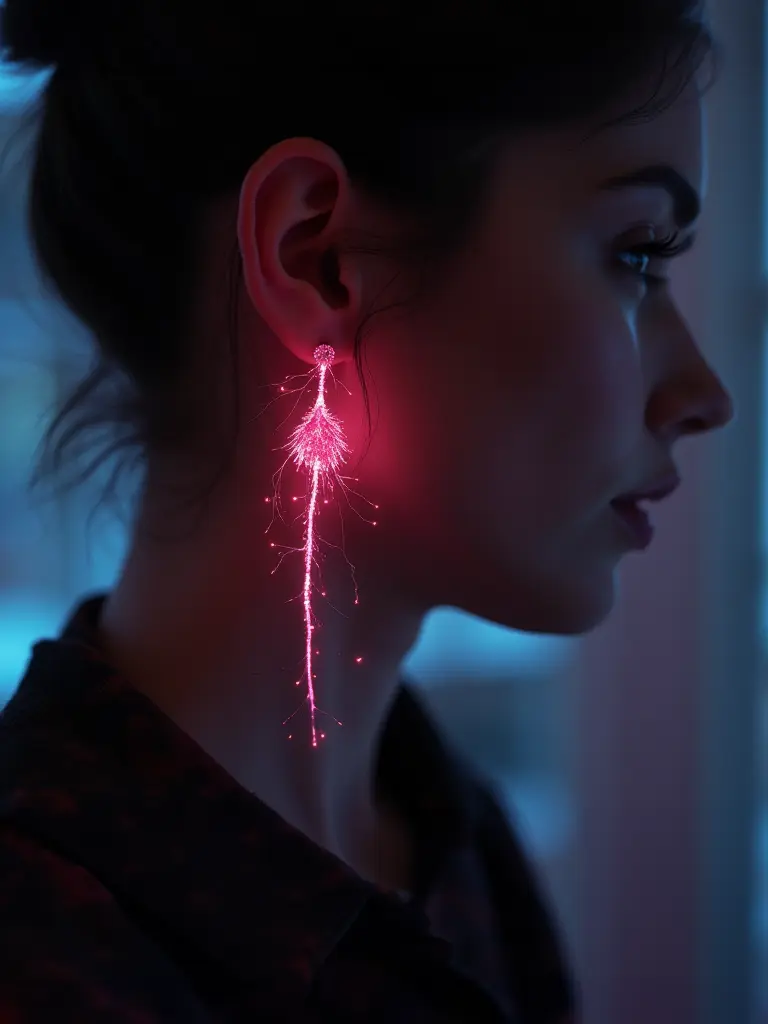
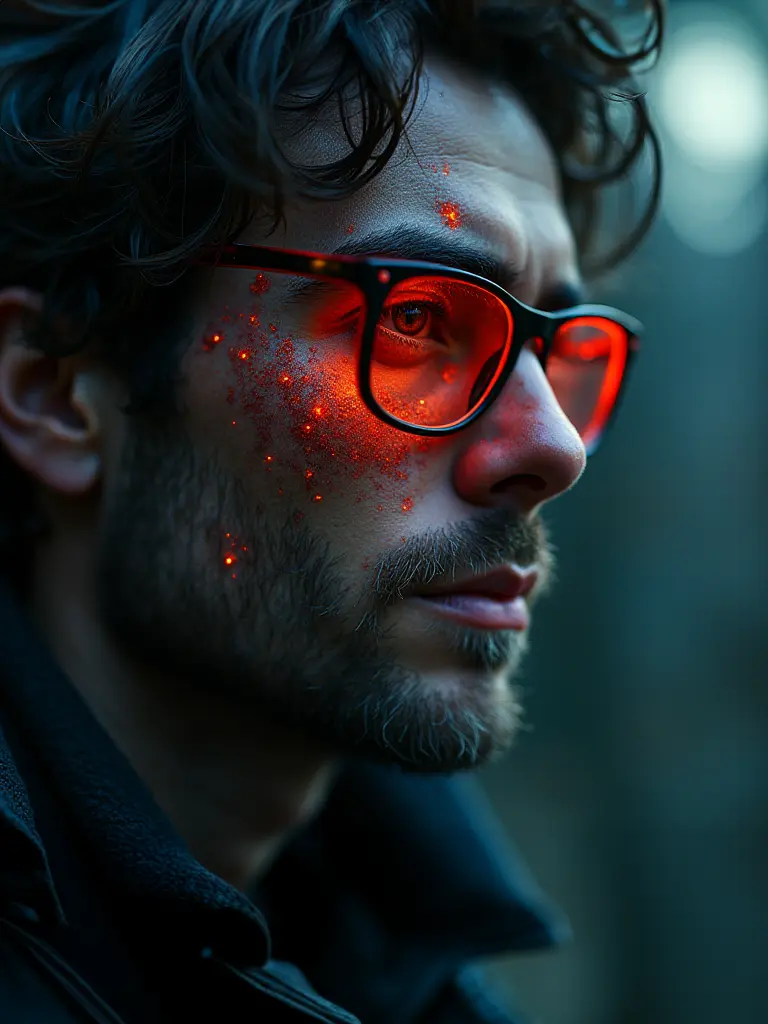
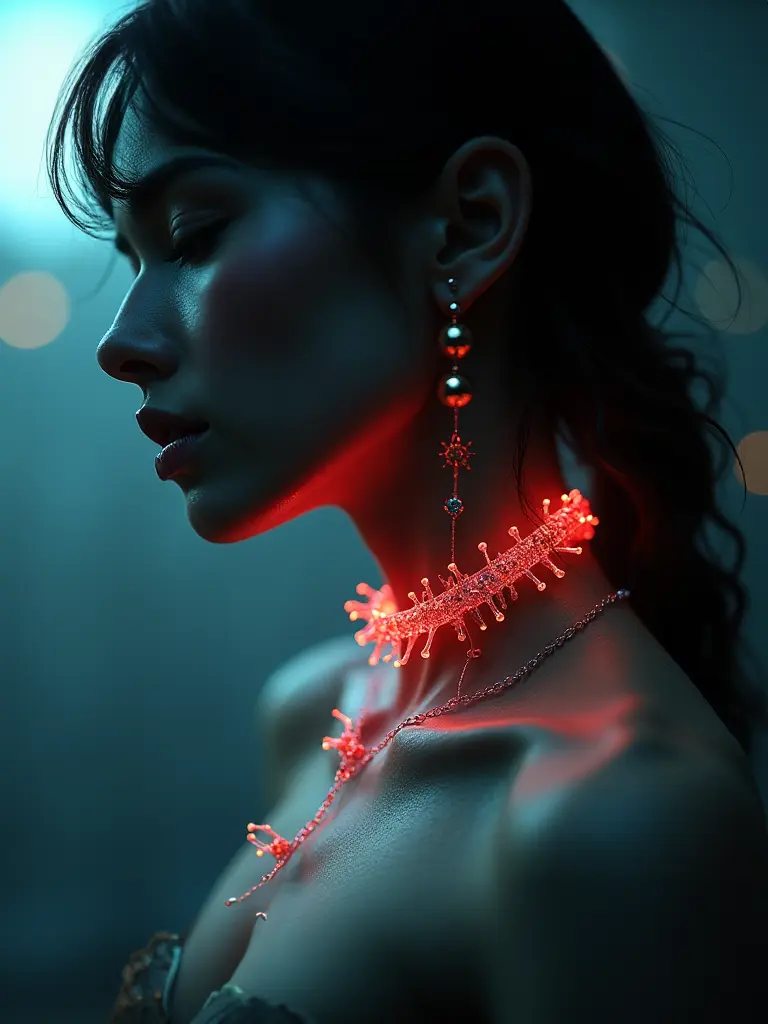
The idea of combining a virus with something we voluntarily and gladly wear—pendants, earrings, watches—seemed very interesting to me. The virus doesn't attack from the outside; it disguises itself as something beautiful and useful, and we ourselves become its carriers. It was a powerful metaphor that worked on multiple levels.
Neural Network Art: From Idea to Animation
The creative process began with generating static images. In ComfyUI, using the FLUX model, I generated key visual concepts, aiming to convey a sense of parasitic organics. In the prompts, I intentionally mixed concepts: tendrils, fungus, jellyfish, pulse lighting—all of this was meant to create an atmosphere of anxiety. Once the static images were ready, the animation stage began. I uploaded them to Runway Gen-3, which was supposed to breathe life into them, making these patterns slowly, almost imperceptibly, spread across the skin. The final touch that sealed the atmosphere was the sound. I turned to the SUNO neural network with abstract prompts about a digital virus and anxiety, and it generated an ambient track that became a fitting soundtrack.
It was particularly interesting to watch how the neural network created music from chaotic rhythms. I recommend listening to the full version of the track; the most interesting part begins after the 2-minute mark, where the neural network starts to hallucinate more and more while trying to maintain the rhythm.
Several other musical variations were created during the process. One of the alternative tracks, created with the prompt "infection spreads, electronic, background music, calm, abstract," seemed interesting but didn't make it into the final video.
The final stage was assembling all the elements in After Effects, where the disparate components were transformed into a cohesive narrative of a silent digital epidemic.
The Concept as a Personal Victory
The result of this two-day race was making the open call's shortlist and receiving a special mention from the curators. Honestly, at that moment, I was disappointed not to win a prize, as I considered "Virus" one of my most "conceptually mature" projects at the time. But I understood perfectly well why it happened.
Creating a graphically flawless work in 48 hours is quite difficult. The project lacked narrative development and stylistic unity, which require time. Essentially, it was a showreel for a powerful concept. And it was precisely the concept, the artistic idea, that the experts noted. For me, this was the ultimate validation: I had touched on something important. It was a huge step forward for me as an artist—realizing that strength isn't always in a perfect picture, but in the depth and precision of the metaphor. Moving forward in my practice, I want to continue experimenting with such multi-layered associations. I believe they will allow me to deepen my artistic works.
But for now, it's time to draw some conclusions.
The Main Antivirus is You
This project became not just a technical experiment for me, but also the formulation of a personal philosophy. I don't use antivirus software on my devices. Not out of carelessness, but out of conviction: most digital threats enter our lives not due to a lack of protection, but because of our own actions. We click on suspicious links, download questionable files, and believe in promises that are too good to be true.
"Virus" is a visualization of this idea. The people in the video voluntarily put on "infected" jewelry, seduced by its beauty. They don't see the threat until the symptoms become obvious.
In my view, contemporary technological art should not only impress but also provoke thought. This AI-powered video art isn't a horror story about cyber threats. It is an invitation to reflect. About the very "digital hygiene" that is far more important than any software. After all, the most reliable antivirus we have is our own awareness and critical thinking. And it is up to us whether we choose to use it.